
Building the Brain of the Sea: Tyler Temple’s Vision for Pollentia
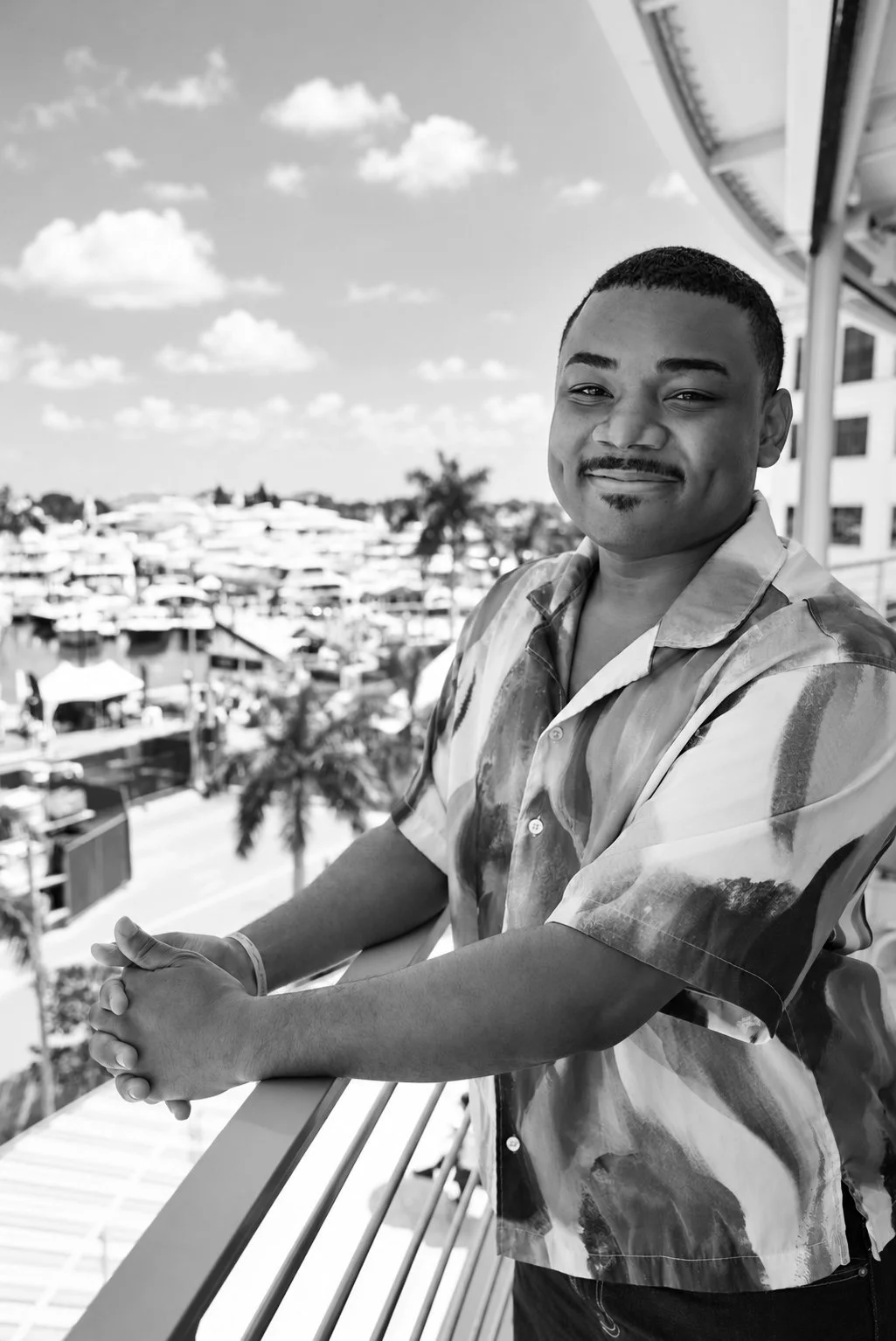
Tyler Temple
For Tyler Temple, the future of boating is not about replacing the person at the helm. It is about giving them a vessel that can think alongside them.
Temple is the founder and CEO of Pollentia, a marine technology company developing what it calls an onboard intelligence layer for vessels—a physical AI system designed to connect propulsion, electronics, sensors, cameras, electrical systems, and other onboard technology into one coordinated platform. Rather than treating a boat as a collection of independent components, Pollentia is building toward something closer to a central nervous system: one intelligence that can monitor the vessel, recognize changes, anticipate problems, and support the operator in real time.
That vision did not begin in a software lab.
Temple is a U.S. Navy veteran and former damage controlman aboard a nuclear-powered aircraft carrier. His experience included electrical and mechanical systems, emergency response, control room operations, and keeping critical shipboard systems functioning under pressure. He later brought that operational background into full-stack software development, systems engineering, and artificial intelligence. Today, he brings more than eight years of hands-on experience across software development, systems engineering, and maritime operations to Pollentia.
In many ways, Pollentia reflects the lessons he learned at sea.
“In the Navy, we operated as shipmates,” Temple explains. “Everything was about unity and working together as one system.”
That concept—many individual parts functioning as one—is now at the center of the company he is building.
From Shipmate to System Builder
Temple saw firsthand that complex vessels depend on more than sophisticated equipment. They depend on awareness.
On a naval ship, people and systems continuously watch one another. A small change can matter. A failure in one area can quickly affect another. Reliability is not simply convenient; under the wrong circumstances, it can become critical.
That experience shaped the way Temple began thinking about recreational and commercial vessels.
“Boats today are a collection of disconnected systems,” he says. “Nothing really works together in a clear way.”
The result, in his view, is a vessel that may contain enormous amounts of technology without having a meaningful understanding of itself.
Individual components can provide warnings and data, but there is often no central intelligence examining how everything relates. Small problems may go unnoticed until they become larger ones.
“A lot of systems are slowly degrading without being noticed,” Temple says. “Most people only find out when something breaks.”
Pollentia was created to change that relationship.
The “Brain of the Sea”

Temple describes Pollentia in deliberately simple terms: imagine something like JARVIS or TARS, but installed physically within the vessel.
Not a chatbot. Not simply another screen.
The company’s AI Co-Captain is designed to operate as a vessel’s central intelligence, processing information directly onboard and combining data from propulsion, electrical systems, sensors, cameras, environmental inputs, and other connected technology. Pollentia says the platform can use that data for functions including navigation awareness, diagnostics, collision prediction, and preventative maintenance.
“The boat understands itself,” Temple says.
That idea changes what a “smart boat” can mean.
Today, smart technology often refers to a collection of connected products. Temple sees the next stage as something more integrated: a vessel capable of understanding changes across its systems rather than simply reporting them independently.
Instead of an operator constantly moving between different systems, the goal is to create one underlying intelligence capable of recognizing what is happening throughout the boat.
Intelligence Without Taking Away the Helm
As artificial intelligence moves deeper into transportation, the inevitable question is autonomy.
Will the boat eventually take over?
For Temple, that is not the point.
“This is about enhancing the human,” he says. “You’re always in control.”
Pollentia is being designed as a support system rather than a replacement for the operator. It continually observes the vessel, identifies changes, and helps surface information that could make decisions clearer or problems easier to recognize.
The distinction is important to Temple. His approach to AI is rooted in the same human-centered philosophy that shaped his time in the Navy: technology should support the people responsible for operating the vessel.
“It’s not about replacing people,” he says. “It’s about making them stronger operators.”
Pollentia’s current architecture reflects that philosophy. The company describes its onboard computing platform as capable of operating locally, allowing intelligence to continue functioning without relying entirely on an external connection.
A Boat That Learns From Every Trip
Perhaps Temple’s most ambitious idea is that the vessel of the future should no longer remain static.
Traditionally, a boat leaves the factory with a defined collection of capabilities. Equipment ages. Systems are serviced or replaced. The vessel changes physically, but it does not necessarily become more intelligent with experience.
Temple believes that relationship can be reversed.
“Boats won’t stay static anymore,” he says. “They’ll evolve.”
Pollentia is building its platform around the idea that software, data, and onboard intelligence can allow a vessel to continue adapting over time. Its system is designed to support software updates and evolving capabilities without requiring the underlying vessel to be continually rebuilt around new technology.
Every voyage potentially becomes another source of information.
Conditions change. Systems behave differently. Patterns emerge. The vessel gains a deeper understanding of the way it is actually being operated.
Instead of technology being something installed once and slowly becoming outdated, Temple imagines a boat that continues becoming more capable.
From Luxury Innovation to a New Baseline
Technology like this will naturally appear first where there is room for experimentation, investment, and advanced integration.
That often means larger and higher-end vessels.
Temple does not believe it will stay there.
“It starts at the high end, but it becomes standard,” he says.
The trajectory is familiar. Technologies once reserved for luxury automobiles—from advanced navigation to driver-assistance systems—eventually became expected features throughout the market.
Temple believes marine intelligence could follow a similar path.
Over time, owners may come to expect a vessel that monitors its own health, identifies problems before they become failures, learns from its environment, and helps make operating the boat simpler.
Pollentia itself has already moved beyond its origins as an electric boat company. Founded by Temple in 2021, the company pivoted toward developing an intelligence platform intended to address the fragmented systems found throughout the marine industry.
That pivot may ultimately say the most about Temple’s ambitions.
He is not trying to build another piece of marine technology.
He is trying to change the way all of those pieces communicate.
Building for the Person at the Helm
Despite the complexity behind Pollentia, Temple repeatedly returns to one word: simplicity.
His background spans naval operations, mechanical and electrical systems, emergency response, software development, and AI. Yet his philosophy is that the person operating the vessel should not have to think about all of that complexity.
The intelligence should work quietly beneath the surface.
That is where Temple’s experiences as a sailor, engineer, developer, and founder begin to converge.
A ship taught him to think in systems. Software gave him the tools to connect them. And Pollentia has become his attempt to bring those worlds together.
The result is an ambitious idea for the future of life on the water: not a boat that replaces its captain, but one that knows itself well enough to become a better shipmate.
For Temple, that may ultimately be what the “brain of the sea” is about—not removing the human from the experience, but building a vessel intelligent enough to support them every step of the way.