How Seagliders Could Redefine Coastal Travel
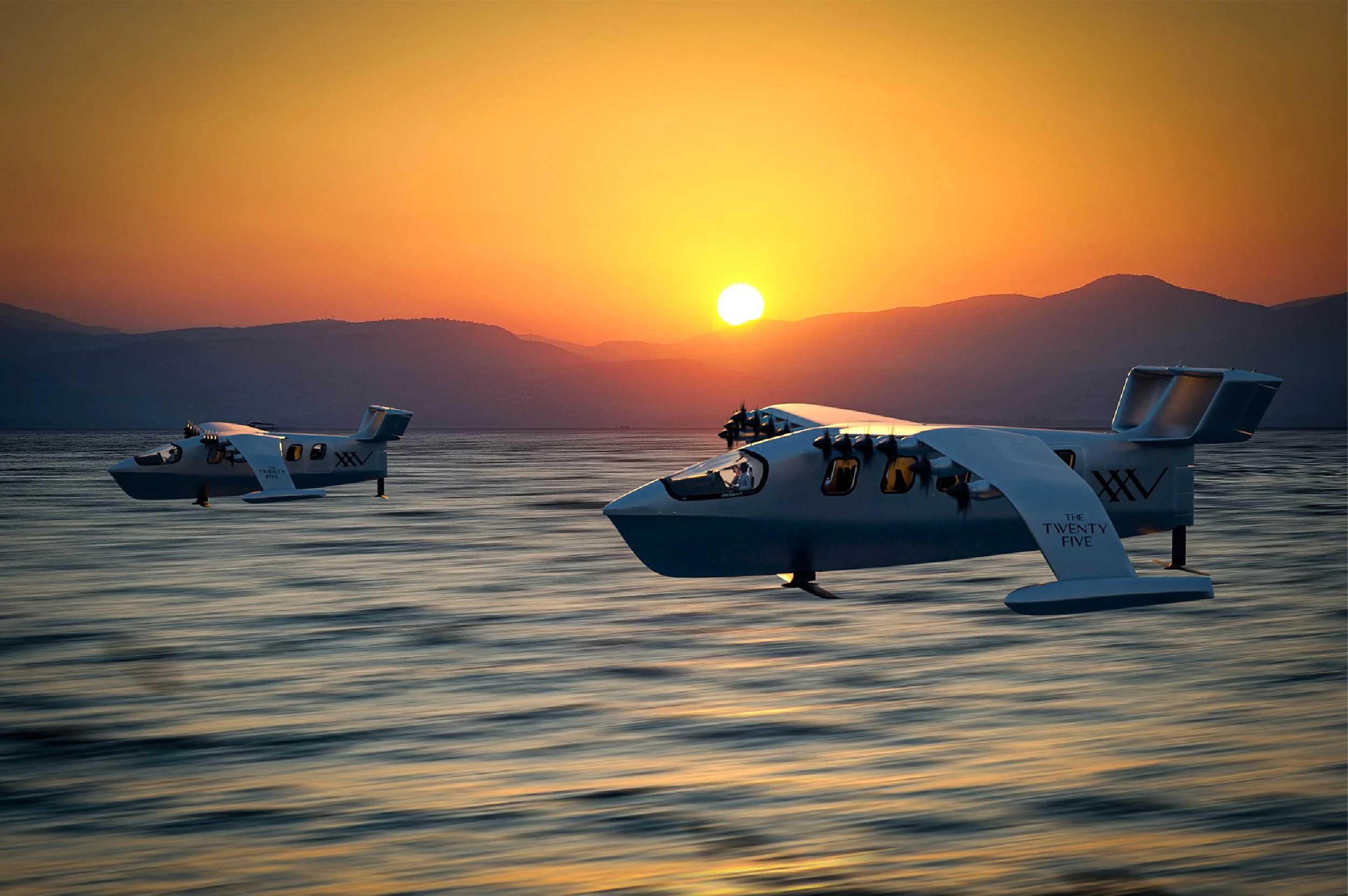
What if traveling between coastal cities felt less like a commute and more like stepping aboard a private yacht?
That is the idea behind The Twenty Five, a new luxury mobility platform built around REGENT Craft’s all-electric Seaglider technology. Part boat, part aircraft, Seagliders are designed to move passengers across the water at speeds of up to 180 mph while operating from docks rather than airports.
We spoke with the team behind The Twenty Five about what it feels like to travel by Seaglider, how the technology could reshape routes like Miami to the Bahamas or Manhattan to the Hamptons, and why the future of luxury coastal travel may be defined less by distance—and more by how much time you get back.
Seagliders combine elements of boats and aircraft—how would you explain this new category of vessel in simple terms?
At The Twenty Five, we’re focused on redefining coastal travel by making a new form of movement actually usable, not just theoretical. We do that by utilizing REGENT Craft’s Seaglider, which is a new category of high-speed, all-electric vessel that delivers the efficiency and speed of flight while staying within the safety and flexibility of maritime travel.
It operates on water and is regulated as a boat, but uses hydrofoils and wing-in-ground effect to glide just above the surface. Because it is built with advanced materials, it can operate across a much wider range of sea conditions than traditional seaplanes, unlocking routes that were previously impractical. The result is a fundamentally different form of transport that is faster and more efficient than boats, significantly lower in cost than helicopters—at roughly 30% of the operating cost—while carrying up to 12 passengers, and without the infrastructure or constraints of aviation. Our role is to bring that capability into a real, usable network.
The vessel operates in three modes—floating, foiling, and flying—how does that translate to the onboard experience?
What matters is that passengers don’t experience this as three separate phases; it feels like one continuous, composed movement. You board like you would a yacht, with no terminals, no queues, and no runway logistics. As the vessel lifts onto hydrofoils, about four feet above the water, it smooths out the ride and removes the harshness you would normally feel on fast boats or seaplanes. Then, almost without noticing, you are gliding at around 30 feet above the surface.
At that point, it becomes quiet, stable, and smooth enough to have a conversation, enjoy a drink, or take a call. There is no vibration like a helicopter, no repeated water impact like a seaplane, and no drag like a ferry. What stands out most is what is missing: noise, friction, and fatigue, replaced by a level of comfort that does not usually exist at this speed.
What makes Seagliders safer or more practical compared to traditional aircraft or high-speed vessels?
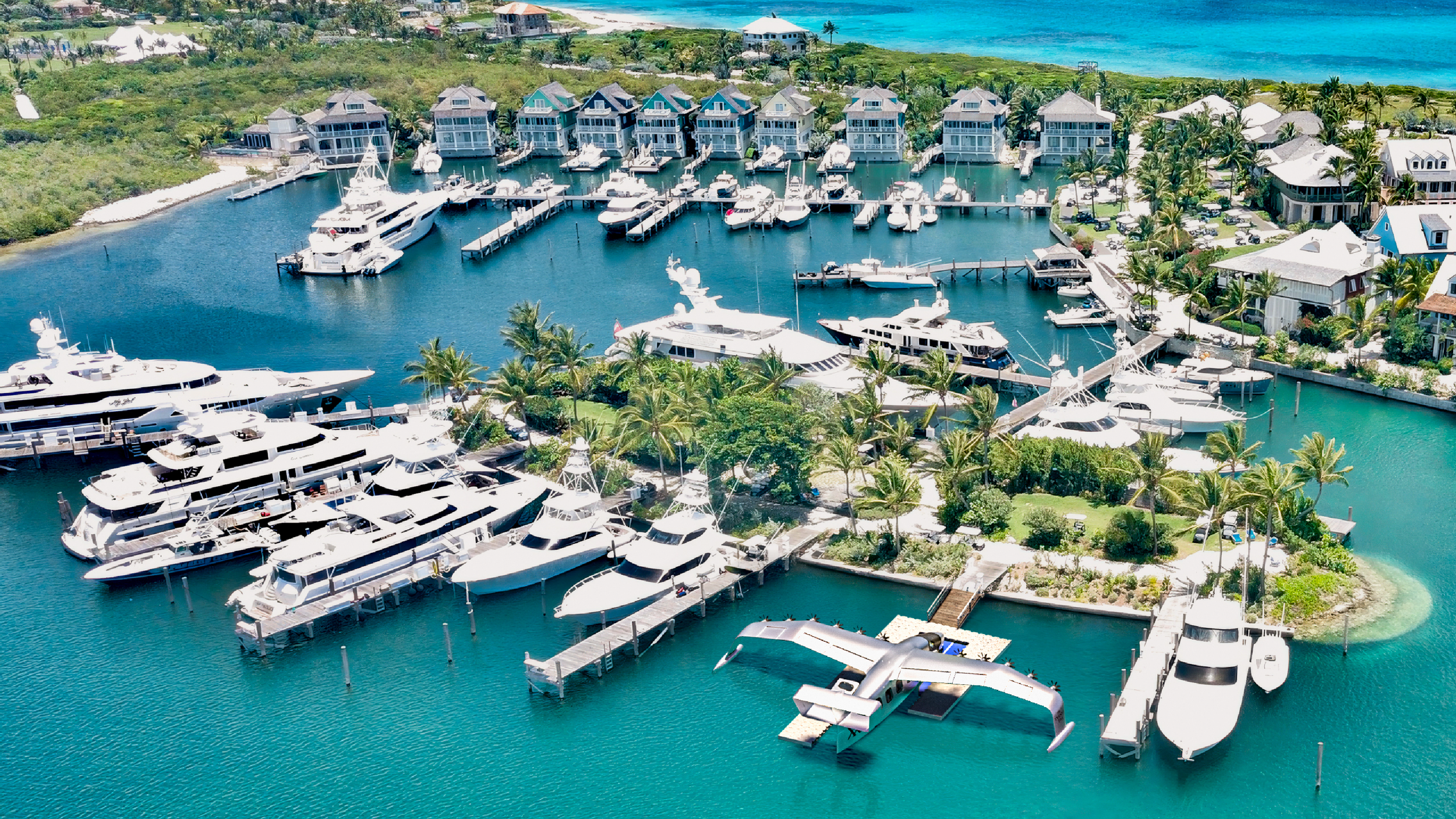
A big part of it comes down to proximity to the water and simplicity of operation. Seagliders fly just above the surface, effectively using it as a constant runway, supported by aviation-grade systems alongside maritime technologies like sonar for situational awareness. They are regulated as marine vessels, which removes reliance on airports and air traffic systems and instead allows them to operate from simple infrastructure like a finger dock. That opens up underutilized marinas and waterfronts, with the ability to moor offshore and transfer via tender when needed.
What strengthens this is the operational layer. Through our partnership with Hornblower, we are pairing this technology with deep maritime expertise in safety, training, and execution. Combined with REGENT and the U.S. Coast Guard, safety is embedded into every decision.
Practically, it also redefines access. Because it is water-based, you can reach destinations in minutes that would take boats hours, without requiring runways or helipads. It combines the control of maritime travel with the performance of aviation in a way that is more flexible and infrastructure-light than either.
With speeds up to 180 mph and routes between coastal cities, how do you see this reshaping regional travel?
This is really about changing how people use time. The idea behind The Twenty Five is that if you can consistently give someone back an hour in their day, you are changing how they live, which is where the idea of the 25th hour comes from.
Journeys that feel slow, indirect, or impractical today become direct and predictable. You move away from airports, security, and delays toward something much simpler: dock to glide to destination.
What that unlocks is new behavior. Routes like Manhattan to the Hamptons or Miami to the Bahamas become realistic, hour-long movements. You start to see new connections across coastal corridors, access to areas where helicopters or fast boats are restricted, and true shore-to-door travel.
Because it is water-based, it removes infrastructure friction. Because it is fast, it compresses distance. The result is not just time saved, but a redefinition of what is actually within reach.
Sustainability is a major focus—how does all-electric propulsion change the future of maritime transportation?
Sustainability isn’t being positioned as a compromise here; it’s part of what makes the experience better. With zero direct emissions at the point of use, you can access environmentally sensitive areas where helicopters and fast boats are restricted. Operating costs are materially lower than helicopters and competitive with fast vessels, and the quiet performance opens up routes that were previously off-limits due to noise.
It also allows for much more flexible infrastructure. To this end, we have recently agreed to a collaboration with a major power management company that will unlock efficiently managed energy systems using microgrid and battery storage technology, opening up markets and locations that do not have traditional infrastructure.
All-electric propulsion removes the traditional trade-offs between speed, cost, and environmental impact, which is what allows this to expand into entirely new use cases.
What milestones are you most excited about as you move toward full flight and commercial deployment?
We think about this as a staged rollout rather than isolated milestones. Full-scale flight testing is targeted for summer 2026, when performance and reliability will be proven in real-world conditions with the U.S. Coast Guard actively engaged. From there, regulatory progression is supported by Hornblower’s expertise, giving a clear path to deployment.
In tandem with REGENT’s delivery milestones, we are developing and finalizing delivery partnerships. These focus on proof-of-concept collaborations, such as hospitality brands and geographic partnerships, with LOIs in various stages of execution.
We are targeting an initial launch in late 2027 in the Northeast and South Florida, starting with charter and corporate partnerships. That phase is about refining the experience, similar to a soft opening. The key inflection point for us is when we have firmed up route demand and confirmed a reliable, repeatable service where technology, infrastructure, and experience all align seamlessly.
Who is the ideal user—passengers, operators, or industries—and where will we see this adopted first?
Initially, we are focused on people who place a high value on time, access, and flexibility. In the early phase, that means Founder Owner Members and select luxury corporate partners, typically second-home and yacht owners with clear coastal use cases.
At the same time, we are embedding Seagliders into luxury hospitality and waterfront residential ecosystems from the outset. As the fleet expands to up to 60 Seagliders between 2028 and 2030, the model scales into different membership tiers while maintaining exclusivity.
You will see this adopted first in high-demand coastal corridors like the U.S. Northeast, South Florida to the Bahamas, and Southern California, where current travel options are inefficient, expensive, or constrained.
Looking ahead, what does the future of coastal mobility look like with Seagliders in the mix?
It becomes far more seamless and far less segmented. Instead of thinking in terms of separate modes of transport, you start to experience travel as a continuous movement from one place to another.
Seagliders are the catalyst, but they mark the beginning of a broader shift. Coastal cities, islands, and waterfront communities begin to operate as part of a single, fluid network.
For The Twenty Five, this evolves into a fully integrated lifestyle platform, including electric yachts, waterside destinations, and curated, end-to-end experiences built around our members. At a macro level, it brings investment and relevance back to underutilized waterfronts.
Ultimately, distance matters less, and what once felt far simply becomes next.
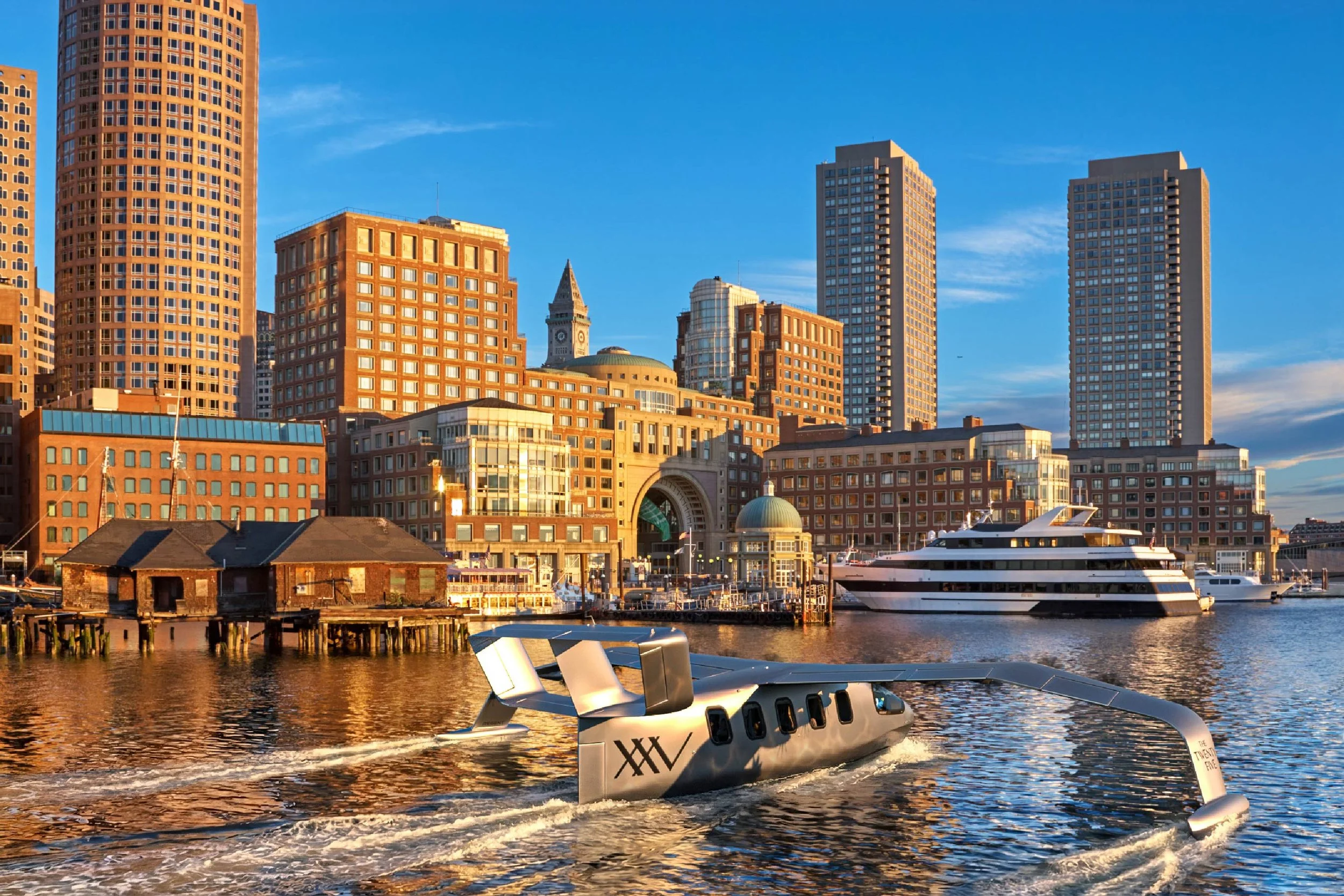
For The Twenty Five, Seagliders represent more than a faster way to move between destinations. They signal a broader shift toward coastal travel that is quieter, more seamless, and increasingly integrated into the places people already live, vacation, and spend time on the water.
As the network expands, the vision is one in which marinas, resorts, waterfront residences, yachts, and coastal cities become part of a more connected ecosystem. Journeys that once required airports, long drives, or hours at sea could become direct, dock-to-destination experiences.
In that future, the luxury may not simply be speed. It may be the freedom to make distance feel almost irrelevant—and to reclaim what The Twenty Five calls the 25th hour.